
Fayette County Arrest History
Fayette County arrest history can begin with the Sheriff, a city police department, a constable, or a state officer. La Grange, Schulenburg, and Flatonia police keep their own incident and arrest reports. Texas DPS may hold the report after a highway arrest. The Fayette County Jail creates a separate booking record when someone enters its custody. A magistrate makes another record, and a clerk opens a court file only if prosecutors file the case.
Those four records are related but not interchangeable. The agency report describes what officers alleged and why they acted. Booking tracks intake, charge, bond, and release or transfer. A magistrate record covers warnings and bail action. The court file later shows the filed offense and disposition. A thorough Fayette County lookup follows the record chain rather than treating one booking line as a complete history.
Call Fayette Jail Without Roster
No official, openly accessible Fayette County jail roster or daily booking blotter was verified. The central fallback is the Fayette County Sheriff and Jail at 1646 N. Jefferson Street in La Grange, phone 979-968-5856. Ask whether the person is in current custody, the exact booked spelling, booking number, booking date, arresting agency, initial charge, bond, and responsible court. If the person is absent, ask whether staff can confirm release or transfer.
The official Fayette County Sheriff page supplies the county jail contact route.
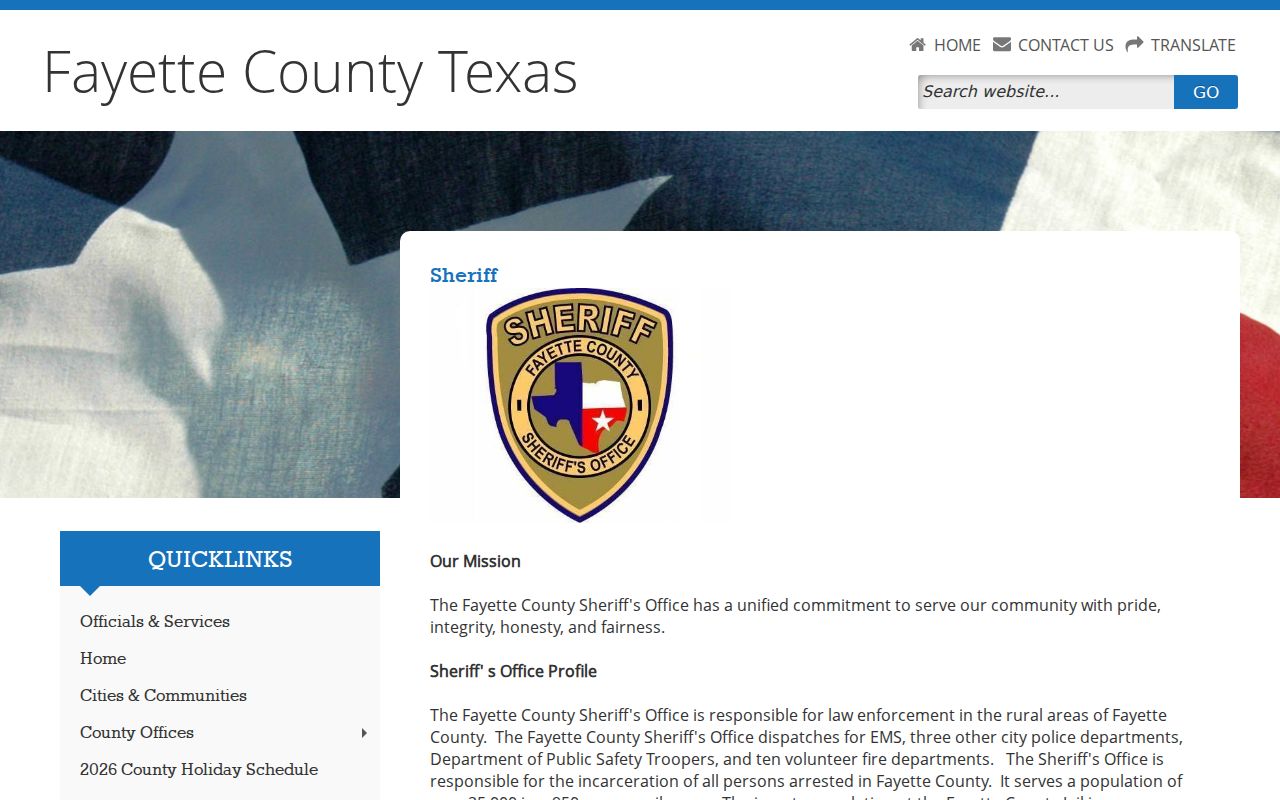
The captured official page is the safest starting point when a commercial roster appears in search results. Call before visiting to confirm lobby hours and identification rules. The jail’s current visitation, mail, deposit, and remote-video vendors were not published in the official material reviewed, so those details should also be checked by phone.
Fayette County Sheriff and Jail
1646 N. Jefferson Street
La Grange, TX 78945
979-968-5856
Call for current custody, booking details, lobby access, and the present records-request method.
Looking Up Fayette County Arrests
A channel-complete Fayette County arrest lookup moves from custody to the agency report, filed case, and any later state record. Start with a date and location. Those facts help identify whether the Sheriff, a city department, DPS, a constable, or another agency made the arrest. Use a full name and known name variants, but do not treat a same-name match as identity proof.
- Call Fayette County Jail at 979-968-5856 for current custody, booked name, booking number, arresting agency, charge, bond, and court.
- Request the booking sheet from the Sheriff, then request the arrest or incident report from the agency that acted.
- Check the County Clerk for Class A or B misdemeanor filings, the District Clerk for felonies, and the proper municipal or justice court for fine-only matters.
- Use the Texas DPS public repository for reported convictions and deferred adjudications, or follow the fingerprint self-review route for one’s own identity-matched Texas history.
- If no online result exists, send a precise Texas Public Information Act request to the record-holding office and ask for a cost estimate.
- For a transfer, search TDCJ state custody or the BOP federal locator, then verify the result with the responsible agency.
The county’s public-information policy says each elected official or department head controls records held by that office. There is no single countywide open-records desk.
Which Fayette Agency Made Arrest
The arresting agency controls the officer’s report, while Fayette County Jail controls the booking file. This division matters along I-10, U.S. 77, U.S. 90, U.S. 71, and State Highway 95. A stop near a city may involve city police, the Sheriff, or Texas DPS. Geography alone cannot identify the custodian.
| Agency | Main Record Route | Contact Clue |
|---|---|---|
| Fayette County Sheriff | Sheriff TPIA request and jail | 1646 N. Jefferson; 979-968-5856 |
| La Grange Police | City or police records request | Official city or TCOLE contact |
| Schulenburg Police | City or police request | Official Schulenburg site |
| Flatonia Police | Police or city request | 205 E. South Main; 361-865-3337 |
| Constables | Precinct or county request | County justice directory |
| Texas DPS | DPS public-information request | Agency shown on booking record |
Ask for the offense report, supplements, dispatch material, photographs, or body-camera record separately because review and release rules can differ. A clear request gives the incident number, date, time, location, agency, and desired format. Active-case, victim, juvenile, medical, and driver data may be redacted.
Inside a Fayette County Arrest Record
A Fayette County arrest file can contain more than a brief booking entry. Request the fields needed to trace the event: agency incident number, arrest time and place, legal basis, alleged offenses, warrant or capias number, transport destination, booking number, bond, magistrate action, and release or transfer. Some identity, victim, medical, juvenile, and active-investigation details may not be public.
| Booking Number | Connects jail intake, custody questions, and a later record request. |
|---|---|
| Booking Date and Time | Shows when Fayette County Jail received the person. |
| Arresting Agency | Identifies which office should receive the report request. |
| Charges | Lists initial allegations, which may change after prosecutor review. |
| Bond | Shows charge-specific amount or hold information at that point in time. |
| Booking Photo | May be subject to TPIA review and applicable exceptions; no county gallery was verified. |
| Release Status | May state bond, release, sentence completion, or transfer. |
Texas does not require every booking photograph to appear in an online gallery. Fayette County’s lack of a public mugshot page does not show that no photo was taken. Request releasable records from the custodian and avoid commercial mugshot sites.
Fayette Jail Versus TDCJ Search
Fayette County Jail covers local pretrial custody, short county sentences, and transfer status. The TDCJ Online Inmate Search covers people in state custody and certain supervision contexts. It does not show a Fayette jail pod, live county bond, police report, or complete case docket. Search it after there is reason to think a sentenced person moved into TDCJ custody.
The captured TDCJ form shows the state locator fields available after a Fayette County transfer.
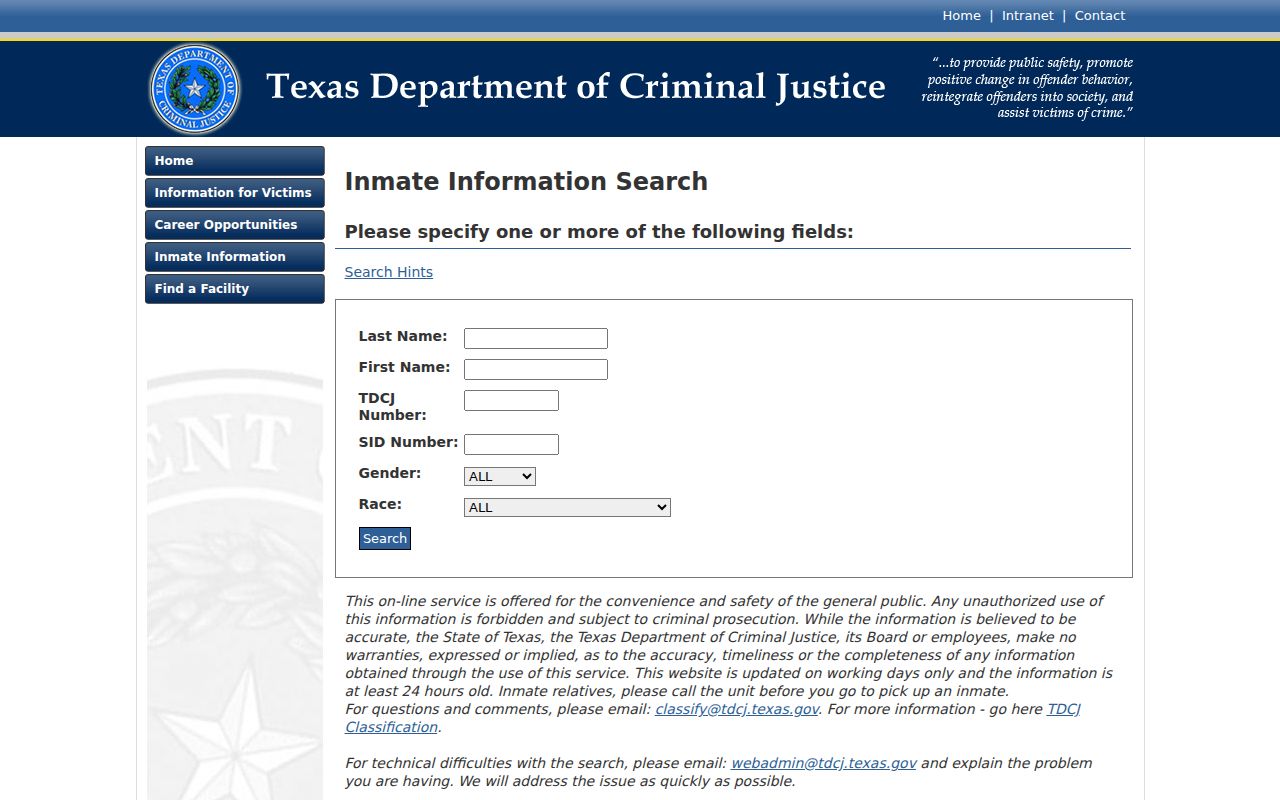
The form accepts a last name with optional first name, or a TDCJ or SID number. Gender and race can narrow a name search. A result may show the TDCJ number, facility, county of conviction, offense, sentence date, projected release date, and parole information. Projected dates can change, so verify them with TDCJ.
Booking Logs and Recent Arrests
Because Fayette County does not publish a verified official daily log, recent arrest confirmation begins with the jail phone and the arresting agency. A phone inquiry may resolve current custody but may not provide the entire booking sheet. Follow it with a written request when the booking number, bond history, release entry, or a releasable copy is needed.
An absent result proves little. The person may have been released, transferred, booked under a different spelling, cited without jail intake, or held elsewhere. A police report can also exist without an arrest. VINELink may supply custody-change notifications where Texas or local participation covers the record, but the Fayette County Jail remains the source to confirm current custody.
Check the filing court after prosecutor intake because initial jail data may appear before the clerk opens a case. The Fayette County criminal court cases route explains how to match the later filed charge and judgment.
Note: Current-custody information can change quickly, so confirm bond, court, and release details with Fayette County Jail.
Fayette Booking and Magistration Trail
After arrest, an officer creates the agency report and transports the person to an authorized booking point. Fayette County Jail staff establish identity, inventory property, complete safety and medical screening, take fingerprints and a booking photograph, record initial charges, and create the booking number. Reportable fingerprint and charge events then move through Texas criminal-history reporting channels.
A magistrate gives warnings under Code of Criminal Procedure article 15.17, addresses counsel, and sets or reviews bail and conditions. Presentation must occur without needless delay and generally within 48 hours after arrest. A prosecutor later decides whether to file and what offense to allege. That decision can differ from the booking charge. Release may follow bond, a release order, sentence completion, case outcome, or transfer.
Record flow: Agency Arrest › Fayette Booking › Magistration › Prosecutor Review › Clerk Filing › Disposition
Federal Custody After Fayette Arrest
A federal arrest or transfer does not appear in TDCJ simply because it began in Fayette County. The Bureau of Prisons Inmate Locator is the official federal custody search. It covers federal prisoners, not current Fayette County Jail bookings. Search by register number when available, or by name and identity details.
The captured BOP locator provides the federal path for a person no longer held by Fayette County.
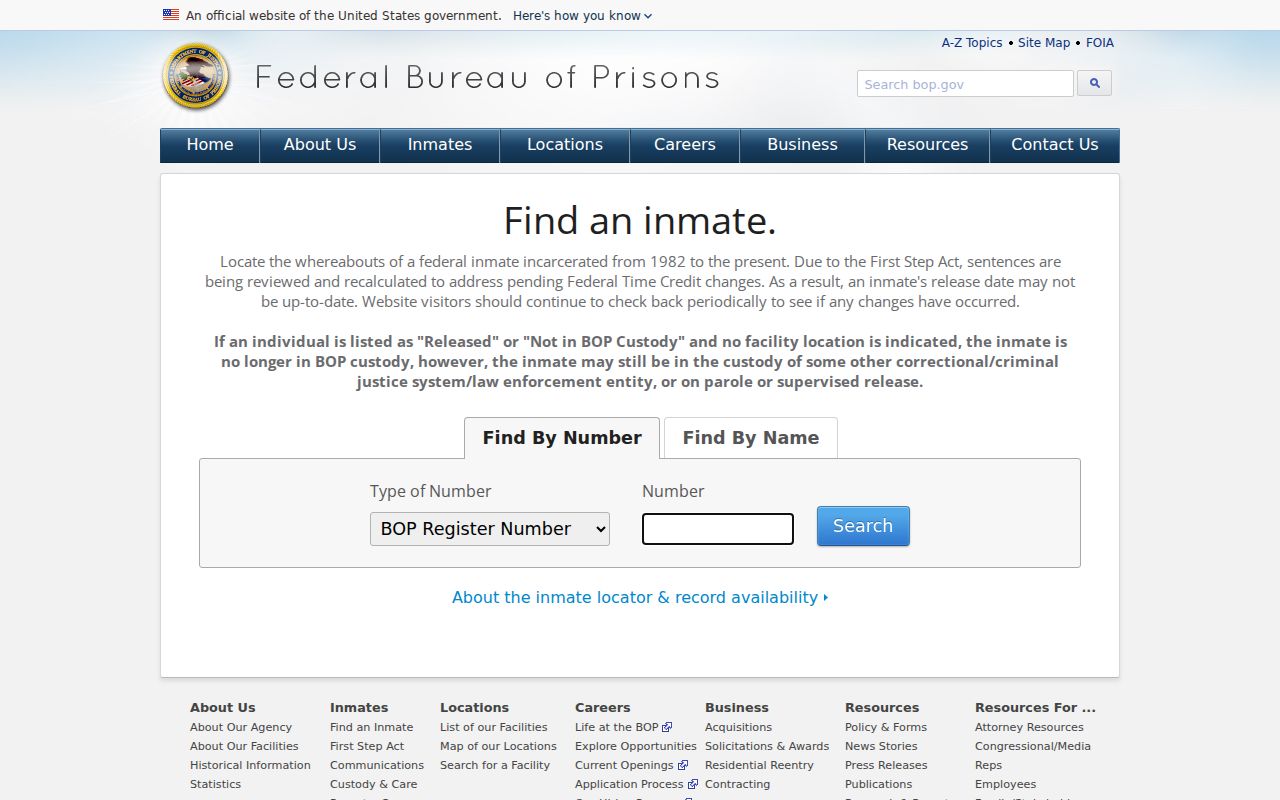
A BOP match still does not supply the Fayette arrest report or the federal court docket. Request the local agency record from its custodian, and use PACER for filed federal cases. Keep local booking, federal custody, and court records separate so each fact is tied to the office that maintains it.
Request Fayette Records Beyond Booking
A booking sheet answers who entered custody, when, on what initial charge, and with what bond or release status. It does not provide the full officer narrative, dispatch history, evidence list, magistrate order, or final court judgment. Request those components from their own custodians. The Sheriff holds its incident and jail records. A city or state agency holds the report it created. The relevant court holds magistration and filed-case material.
A useful Fayette County request states the record type, incident or booking number, date and time range, location, arresting agency, and whether inspection, electronic copies, paper copies, or certification is wanted. Ask for a cost estimate. Under Government Code section 552.221, production must be prompt. The familiar ten-business-day period generally concerns an agency’s request for an Attorney General decision, not a fixed delivery deadline.
Government Code section 552.108 can protect qualifying law-enforcement information. Other rules cover juvenile, victim, medical, motor-vehicle, and private data. An office must produce existing records but need not answer questions or create a new list.
Arrests Are Not Convictions
An arrest means an officer used warrant or probable-cause authority to take someone into custody. It does not decide guilt. A conviction requires a plea or verdict and a judgment. Deferred adjudication is not a final conviction for many purposes, yet it can appear in the DPS public product unless later protected. Dismissal ends a filed prosecution without a conviction on that charge, but the arrest file may remain unless a lawful expunction or other restriction applies.
| Point | Arrest Record | Conviction Record |
|---|---|---|
| Created by | Arresting agency and jail | Court and clerk |
| Shows | Custody and initial allegations | Plea or verdict and judgment |
| Held by | Agency and Fayette County Jail | County, district, municipal, or justice clerk |
| Possible outcome | Release, transfer, or later filing | Dismissal, acquittal, deferred result, or conviction |
Juvenile information is controlled by Family Code Chapter 58 and related law. Sealed, expunged, and nondisclosed records also require care. Quote the Fayette County judgment when an outcome matters, and never infer guilt from an arrest entry.
Note: A Fayette County arrest is an allegation and custody event, not proof that the person committed an offense.