
Sex Offender Checks in Fayette County
The Texas Public Sex Offender Registry is the main public source for a Fayette County registry check. Texas DPS collects records sent by the local registration authorities and makes the public fields searchable at no charge. There is no separate verified Fayette County list that replaces the state system. Start with DPS, then contact the correct police department or the Fayette County Sheriff when a registration-office question or possible compliance issue needs local attention.
A name is useful when the person is known. An address, city, ZIP code, county filter, or map is often better for neighborhood awareness. Read the full profile rather than relying on a map marker. Current status, registration authority, offense facts, and the stated end date or lifetime duty give the marker its meaning. A search result records a statutory registration duty. It does not permit a reader to add claims that the official profile does not make.
How to Search the Texas Public Sex Offender Registry
The official DPS registry landing page explains the search and its conditions of use. The interface supports several paths, which helps when a name is unknown or a common surname produces too many records. Use the narrowest facts that are known, but do not guess a radius or identity field.
- Open the DPS registry and review the lawful-use terms and any verification challenge shown by the live site.
- Choose a name, address, city, ZIP, county, or map search. Select Fayette when using the county filter.
- Compare returned names, aliases, photographs, physical details, addresses, and registration authorities before deciding that a profile matches.
- Open the profile and read its offense, status, risk information, verification requirement, and duration as separate fields.
| Field or Mode | Type | Required | Use |
|---|---|---|---|
| Last Name | Text | Yes in name mode | Primary public name field |
| First Name | Text | No | Narrows a surname result |
| Address | Text | Yes in address mode | Searches a valid Texas location |
| City, County, ZIP | Text or selection | Conditional | Limits the place searched |
| Radius | Selection | Conditional | Use only choices on the live form |
| Map Search | Map | No | Browses by geography |
The official registry screen is shown in the DPS source below.
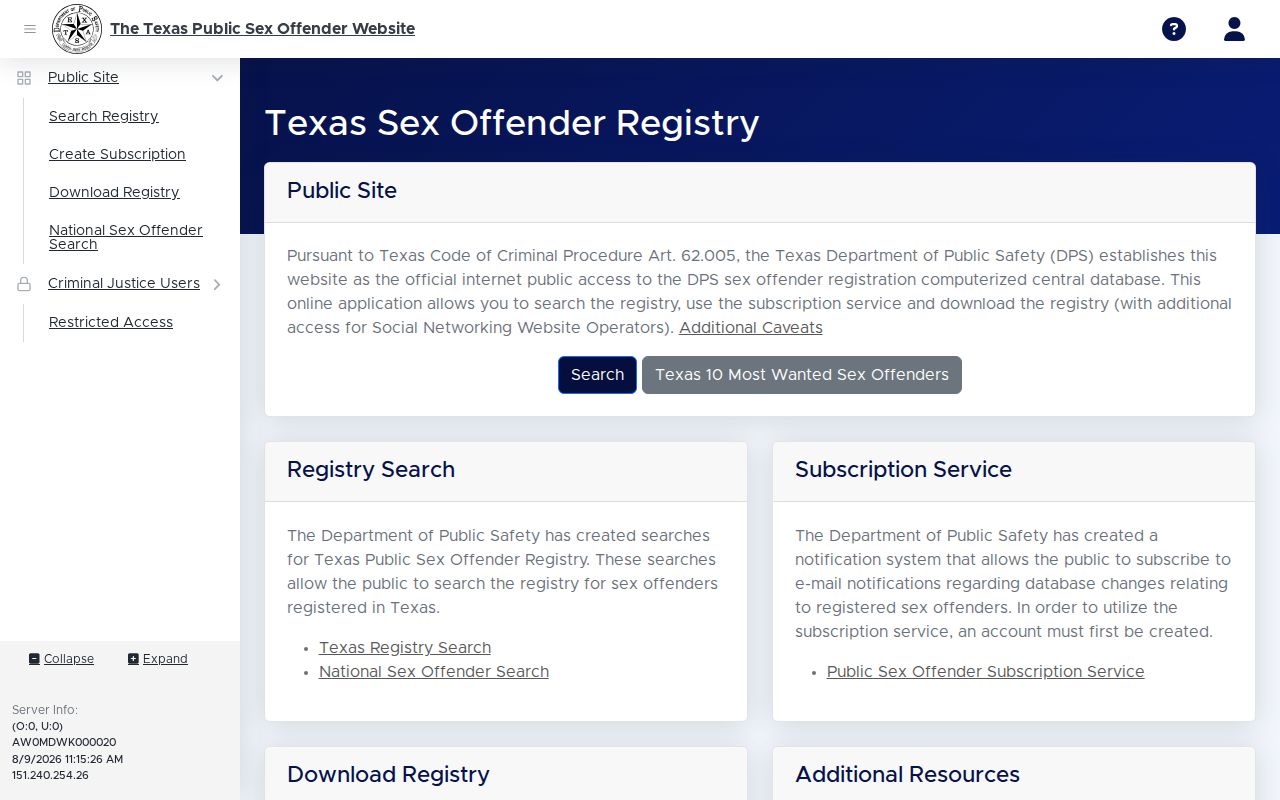
Its state-run search is the proper starting point for Fayette County names, addresses, and map results.
Fayette Registry Address Alerts
DPS offers public notification tools tied to an area or address. That function is useful for ongoing community awareness because it does not require a reader to repeat the same manual search. Platform wording and distance choices can change, so use the options shown on the current form instead of assuming a fixed radius or trigger. Keep the subscription address current and open the official profile when a notice arrives.
Texas also allows added notice in certain cases. When DPS receives notice that a civilly committed sexually violent predator or a high-risk offender will enter a community, postcards may go in English and Spanish to nearby homes and businesses. That process differs from a general address alert. It also does not mean every Fayette County registration produces a mailed card.
Inside a Registry Profile
A public profile combines identity, location, offense, and registration facts. Fields should be read together. A current photograph and aliases help resolve identity, while the registration authority and status explain who verifies the record. An offense description reports the qualifying matter. It should not be expanded into a claim about conduct that the profile does not list.
| Name and Aliases | Public name forms used to distinguish the listed person. |
|---|---|
| Photo and Description | Photograph, sex, race, height, weight, hair, eyes, and public marks or tattoos. |
| Location | Public address or geographic location and the responsible registration authority. |
| Offense Record | Description, Penal Code citation, conviction or adjudication date, sentence, and public victim category fields. |
| Registry Duty | Status, risk level when assigned, verification requirement, and end date or lifetime notation. |
| Other Public Fields | Higher-education status and qualifying vehicle information when applicable. |
DPS withholds social security and driver license numbers, phone numbers, online identifiers, employer identifying details, victim identities, and other DPS-only material. A court can also order some juvenile registration information nonpublic. The Texas Sex Offender Registration Program explains this statewide framework.
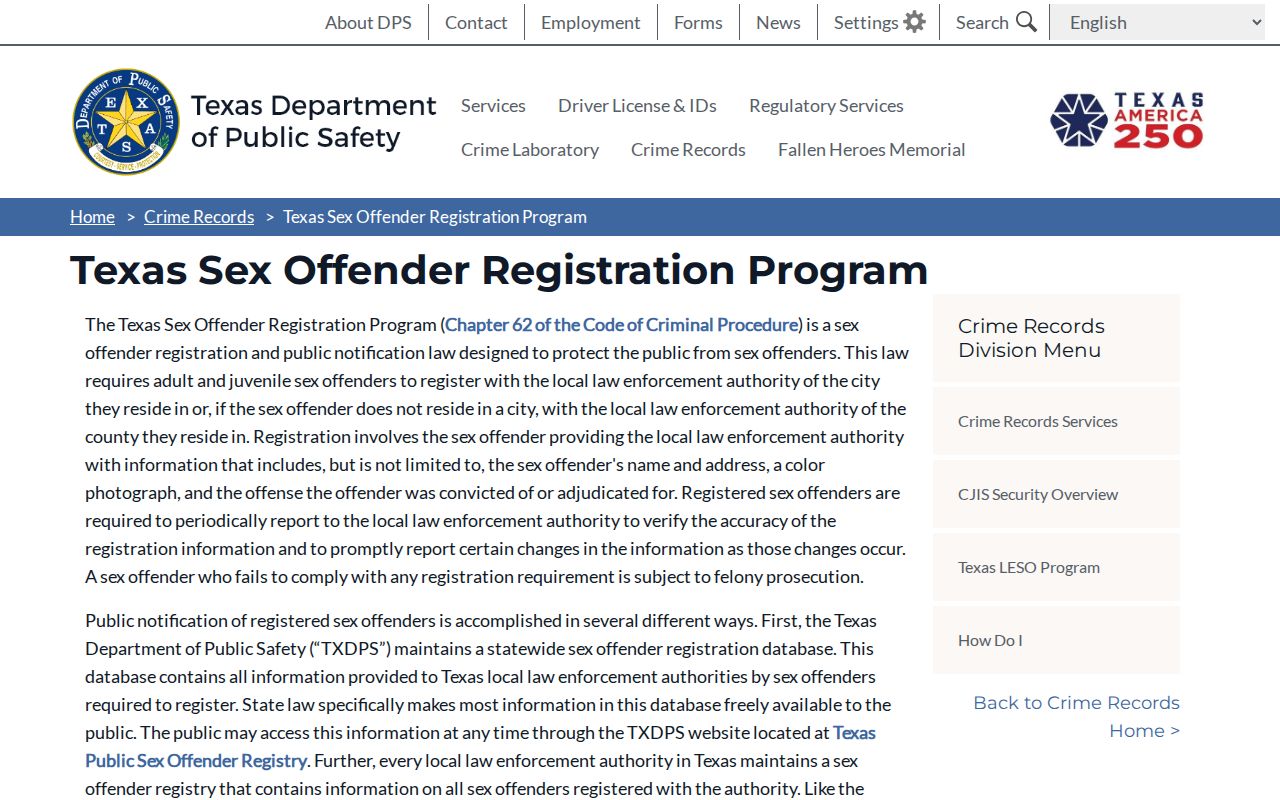
The program material helps separate a public registry field from protected data held for law-enforcement use.
Fayette Registry Across State Lines
The National Sex Offender Public Website, or NSOPW, searches participating jurisdictions across state lines. It adds value when a person has moved, when the relevant address is near a state border, or when the correct state is uncertain. For a known Fayette County address, DPS provides the most direct Texas record and the local registration authority. NSOPW is a national layer, not a replacement for the Texas profile.
The national search interface appears in the linked official source.
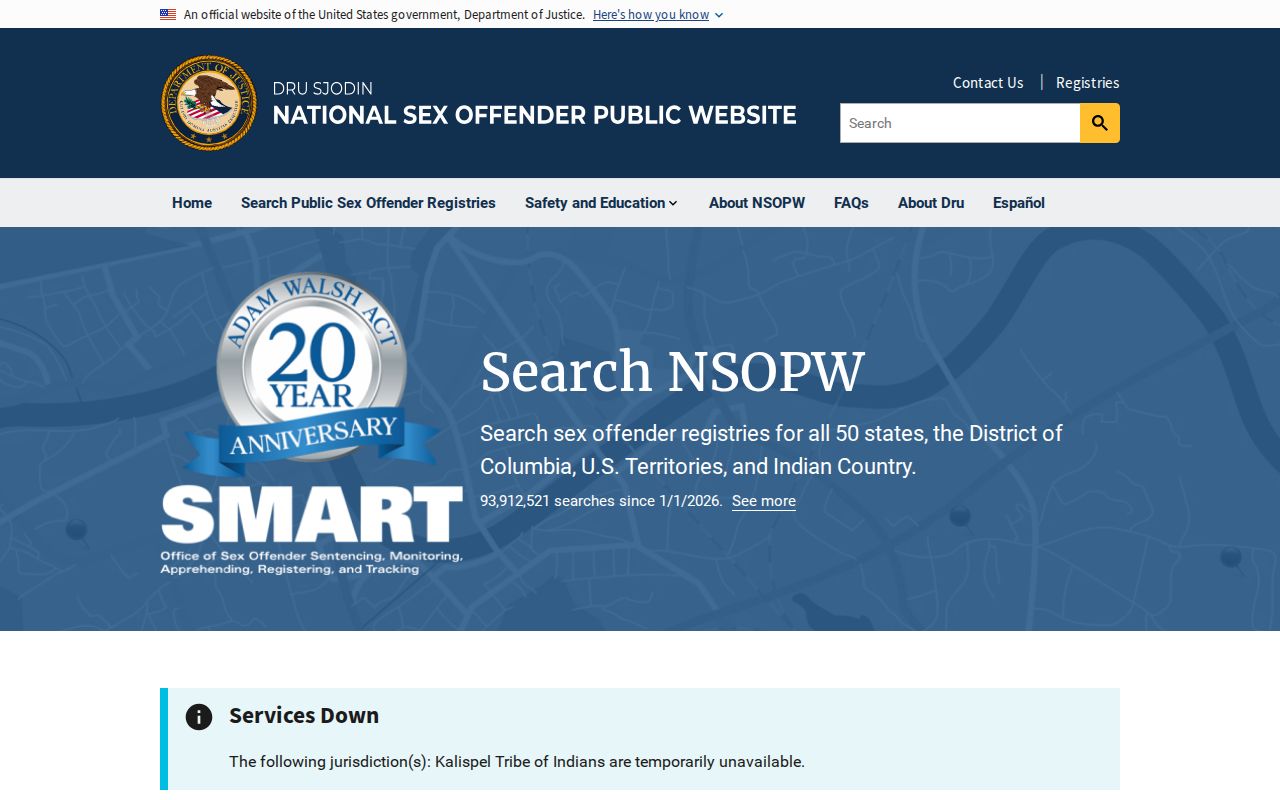
Any national match should be opened through its participating jurisdiction so the reader sees the current source record and local terms.
Texas Registration Levels and Requirements
Texas does not reduce public registration to a simple federal Tier I, II, and III chart. Duration depends on the offense and circumstances listed in Code of Criminal Procedure Chapter 62. Adult duties are commonly lifetime or ten years after discharge from supervision. Juvenile duties and relief rules differ. An out-of-state duty can depend on both Chapter 62 and the originating jurisdiction.
| Texas Category | General Duration | Public or Notice Point |
|---|---|---|
| Adult lifetime category under art. 62.101(a) | Life | Public fields remain subject to statutory exclusions; specified high-risk cases can trigger postcards. |
| Other adult reportable matter under art. 62.101(c) | Generally ten years after discharge | Confirm the offense and discharge calculation. |
| Juvenile registrant | Court and statute dependent | A court may make registration nonpublic or grant relief. |
| Extrajurisdictional or conditional duty | Chapter 62 and origin dependent | Confirm with DPS and the local authority. |
A low, moderate, or high risk assessment can affect notification. It is not the same as the number of years a person must register. Verification frequency also depends on the statutory category, so a public user should rely on the profile rather than infer a schedule from a risk label.
Correcting Fayette Registry Concerns
If an address appears wrong, do not confront the listed person or household. First confirm that the result is current and that the profile matches the intended person. Then report the concern to the registration authority named on the profile. La Grange, Schulenburg, and Flatonia police handle city registrations, while the Fayette County Sheriff handles unincorporated areas. DPS's Sex Offender Registration unit can be reached at 512-424-2800.
A Texas Public Information Act request can seek releasable local registration material that the public profile does not show, but Chapter 62 still protects nonpublic fields. The Texas Public Information Act does not turn protected data into public data. Describe the record and responsible authority precisely, and ask for an electronic response or an itemized cost estimate when appropriate.
Note: A stale-looking map point should be verified through the official profile and responsible Fayette County registration authority.
Fayette County Registry Distance Limits
No verified Fayette County-wide ordinance creates one residence distance for every registrant. Texas also has no single blanket statewide distance rule that applies in the same way to all people on the registry. Parole conditions, community-supervision terms, and municipal ordinances can impose different limits. A map search therefore cannot answer whether a residence violates an individual condition.
The sound course is to check the governing order and ask the supervising or registration authority. Do not measure from a school or park and declare a violation based on an assumed number. That shortcut confuses public location data with a legal restriction that may be person-specific.
Community Notification and Lawful Use
Registry access exists for safety and community awareness. Search, compare, and verify. The record may help a family understand an official notice, review an area, or identify the authority responsible for a possible compliance concern. It does not authorize punishment, threats, public shaming, or claims beyond the government record. Questions about a Fayette County entry belong with DPS or the named local authority.
Use registry information lawfully: Misusing Texas registry information to injure, harass, threaten, or commit a crime against a registrant or family is prohibited. Review the registry warning and Chapter 62, and report concerns to officials rather than confronting anyone.
The Texas DPS mobile app offers access to the state registry, Most Wanted information, alerts, and tips. It is a statewide tool, not a Fayette County registry or jail app. This distinction matters because no dedicated local law-enforcement app or app-only Fayette registry tool was verified.