
Fayette County Criminal Court Cases
Fayette County criminal court cases divide by offense level. The 155th Judicial District Court hears felonies, and the Fayette County District Clerk keeps those files. Class A and Class B misdemeanors proceed in Fayette County Court, with the County Clerk as custodian. A state-jail felony still belongs in District Court, despite the word “jail” in its name. A Class C misdemeanor may stay in a justice court or one of the municipal courts in La Grange, Schulenburg, or Flatonia.
That split controls where a docket, charging paper, judgment, or warrant entry can be found. The Fayette County justice-court directory identifies the four precinct courts. City ordinance cases and fine-only state offenses may never reach either county clerk. When the offense level is unclear, ask the arresting agency for the responsible court, then confirm the filing with that clerk.
Fayette Felonies at District Clerk
The District Clerk is the direct route to felony files in Fayette County. Its online contact form asks for the requester’s first and last name, phone, email, confirmation email, a question or comment, and a CAPTCHA. That form sends an inquiry; it does not return a live case result. State the party name, cause number if known, approximate filing year, and exact item wanted. A request for a “record” is less useful than one naming the docket sheet, indictment, judgment, sentence, or certified disposition.
The official Fayette County District Clerk page supplies the current clerk channel. Its captured view shows the county’s felony-record entry point.
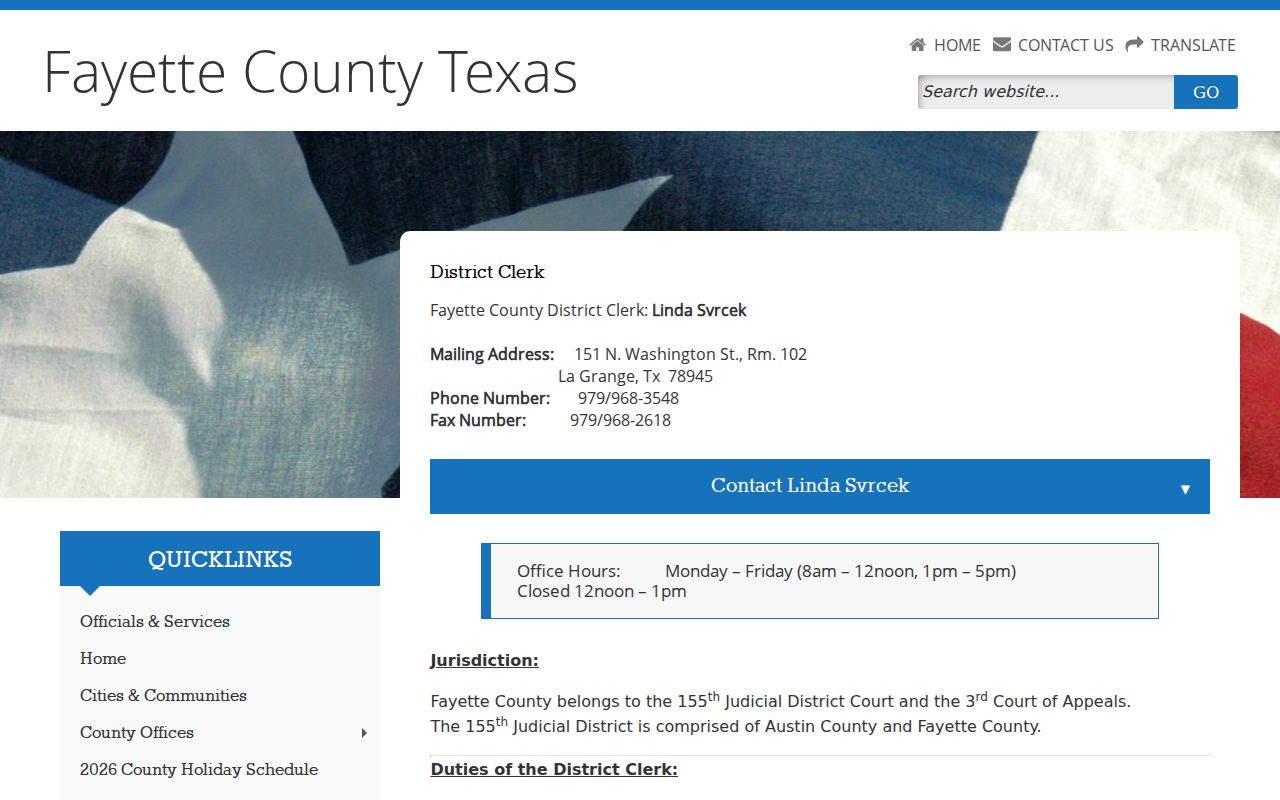
The page is the right place to confirm current delivery instructions before sending a copy or certification request. For a Fayette County file that must be used to correct a state history, ask for a certified judgment or disposition rather than a screen print.
Searching Fayette County Case Records
Begin a Fayette County court search with the offense class and likely filing year. A party name alone can produce a same-name problem, while an arrest date may precede the filing date. The local clerks are the primary channels. re:SearchTX is a useful supplement, but Fayette County participation, visible documents, and access rights can vary. Older records may exist only on paper, microfilm, or in remote storage.
- Decide whether the matter is a felony, Class A or B misdemeanor, or fine-only municipal or justice case.
- Contact the matching Fayette County clerk with the party name, cause number, offense, and approximate year.
- Request the register or docket first so its entries identify the documents and final status.
- Order the charging instrument and judgment, and ask whether electronic delivery is available.
- For formal proof, request certification and confirm the fee before the Fayette County clerk makes copies.
The clerk contact form uses these fields. They describe the requester, so the case details belong in the question box.
| Field Label | Type | Required | Notes |
|---|---|---|---|
| First and Last Name | Text | Yes | Requester’s name |
| Phone Number | Text | Yes | Used for a callback |
| Yes | Must be valid | ||
| Confirm Email | Yes | Must match | |
| Question or Comment | Text area | Yes | Add cause, party, year, and document |
| reCAPTCHA | Challenge | Yes | Prevents automated submission |
When Fayette Court Downloads Fail
re:SearchTX is the statewide court-record platform, but it does not replace either Fayette County clerk. Registration may be needed, a participating court may limit document access, and a docket view is not a certified copy. Search by the most precise details available. Then compare the court, cause number, filed offense, and status with the local custodian before relying on the result.
The captured re:SearchTX interface illustrates the statewide path used for some Fayette County criminal court cases.
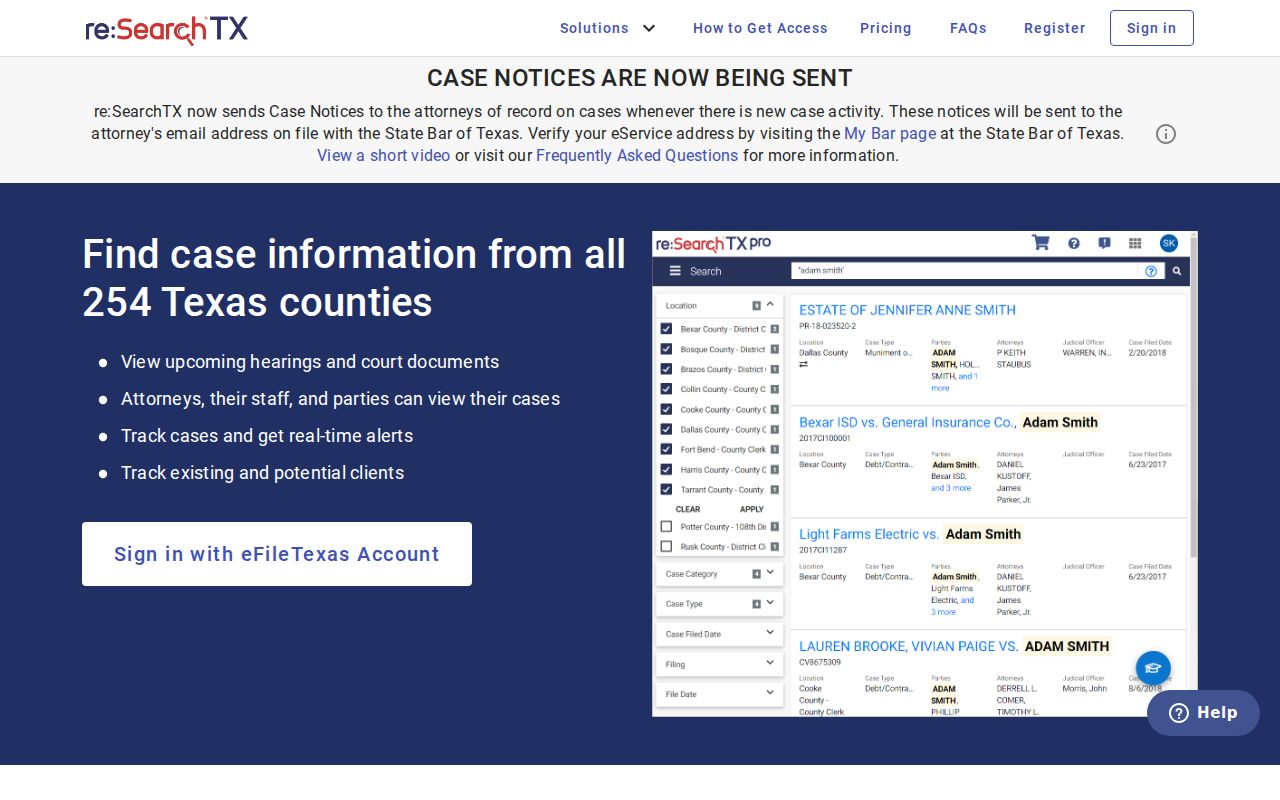
If no Fayette County document appears, contact the proper clerk. Ask whether the case predates digitization, sits in paper or microfilm, has been archived, is pending upload, or is restricted. A missing portal result does not show that no case exists. It may simply show the limits of the remote access layer.
Inside a Fayette County Case File
A Fayette County case file is richer than an arrest or booking entry. It can show the case style, cause number, filed charge, statutory degree, assigned court, attorneys, bond, settings, motions, plea, verdict, judgment, sentence, costs, and appeal notice. Some items may be redacted or withheld, including victim identifiers, sensitive personal data, and material protected by a sealing, expunction, or nondisclosure order.
| Case Number and Court | Identifies the Fayette County file and the court with custody. |
|---|---|
| Charging Document | The complaint, information, or indictment states the offense prosecutors filed. |
| Docket Entries | List filings, hearings, motions, orders, and other steps by date. |
| Hearing Dates | Show past settings and, after direct confirmation, the next court event. |
| Disposition and Judgment | Record dismissal, acquittal, deferred adjudication, or conviction. |
| Sentence and Conditions | State confinement, community supervision, fines, costs, or other terms. |
Read the charging instrument and judgment together. The first states an allegation. The second records the court’s outcome. A booking charge, filed offense, and final offense may differ.
Fayette Misdemeanors at County Clerk
The Fayette County Clerk expressly lists misdemeanor criminal cases among its records. Its public counter is at 246 W. Colorado Street in La Grange, north of the courthouse square. Office hours are weekdays from 8 a.m. to 5 p.m., with a noon-to-1 p.m. closure. The phone is 979-968-3251. Calling first can prevent a wasted trip, especially when a record may be archived or a certified copy is needed.
The official County Clerk page is the source for the Fayette County misdemeanor counter and current contact route. Attorney e-filing has been mandatory for most criminal filings since July 2019, but that rule does not make every filing a public download. Ask the clerk what is available and what form of copy can be issued.
How a Criminal Case Moves
A Fayette County case may start with an arrest or complaint, followed by magistration. Article 15.17 calls for presentation before a magistrate without needless delay and generally within 48 hours after arrest. Prosecutors then review the facts. A misdemeanor can proceed by information, while a felony generally moves through grand-jury indictment. Arraignment, discovery, and pretrial motions follow before a plea or trial.
Case flow: Charges Filed › Arraignment › Pretrial › Plea or Trial › Disposition › Sentencing
The docket records each formal stage, yet no generic time estimate fits every Fayette County case. Court settings change. A plea may shorten the path, while motion practice, trial, or appeal may extend it. Confirm a future setting with the clerk rather than treating an old portal date as current.
Note: A Fayette County booking charge can change before prosecutors file the criminal court case.
Fayette District Court and Clerk
The 155th District Court page identifies Fayette County’s felony trial court. The court decides cases, while the District Clerk maintains its file. That distinction matters when asking for records. A clerk can locate and copy filed material but cannot give legal advice or explain what a judge may do next.
The captured court page provides a visual check on the named tribunal for Fayette County felony matters.
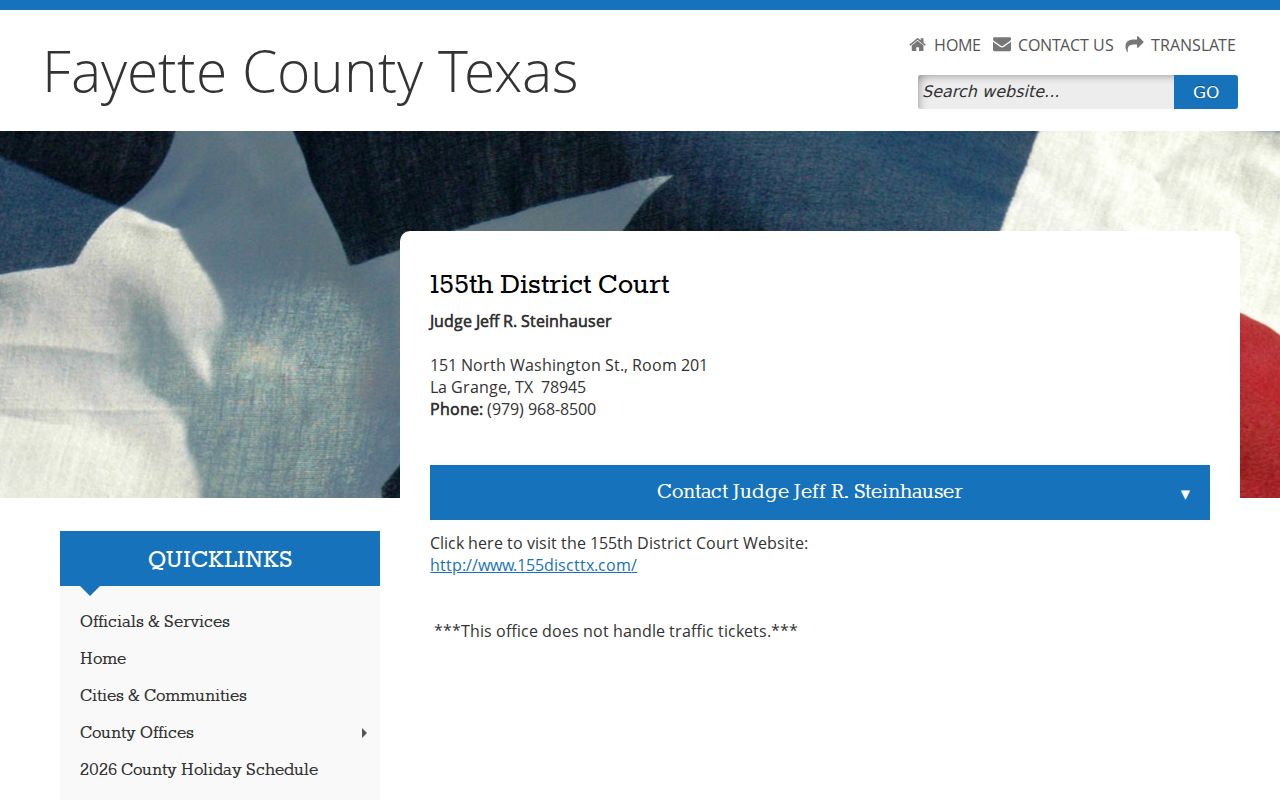
For a status check, give the cause number and party name. For a record correction, compare the certified judgment with the DPS entry. If the Fayette County judgment itself is wrong, raise the issue through the court and clerk. If the judgment is correct but the state record is missing it, use the certified disposition in the DPS review and challenge process.
Federal Cases Beyond Fayette Courts
Federal criminal cases do not sit in a Fayette County clerk’s file. Fayette County lies in the Southern District of Texas, and the official docket route is PACER. PACER requires an account and applies the judiciary’s current fee rules. Search the federal court and verify the case number before ordering documents.
The captured PACER screen marks the separate federal access channel.
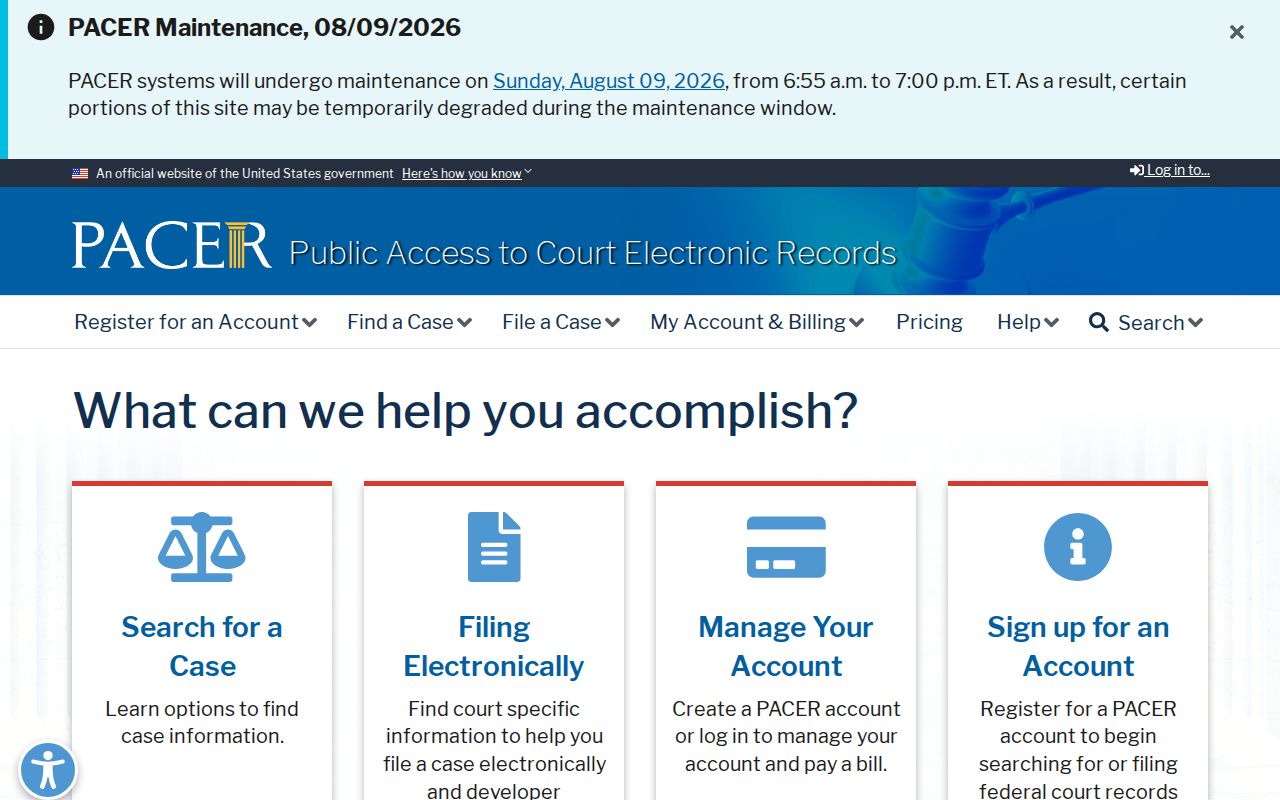
A PACER docket is not a Fayette County case file, and the District or County Clerk cannot certify it. Likewise, an FBI identity-history summary is not a federal court docket. Use each source for its own record and direct copy questions to the court that filed the case.
Fayette Charges and Prosecutor Files
The Fayette County Attorney handles county-level misdemeanor prosecution and related county duties. Prosecutor records and clerk records serve different roles. The prosecutor reviews and files charges; the County Clerk keeps the court case. A prosecutor file may also contain material that is not part of the public judicial record or that remains protected while a matter is active.
The official Fayette County Attorney page identifies the local misdemeanor prosecution channel.
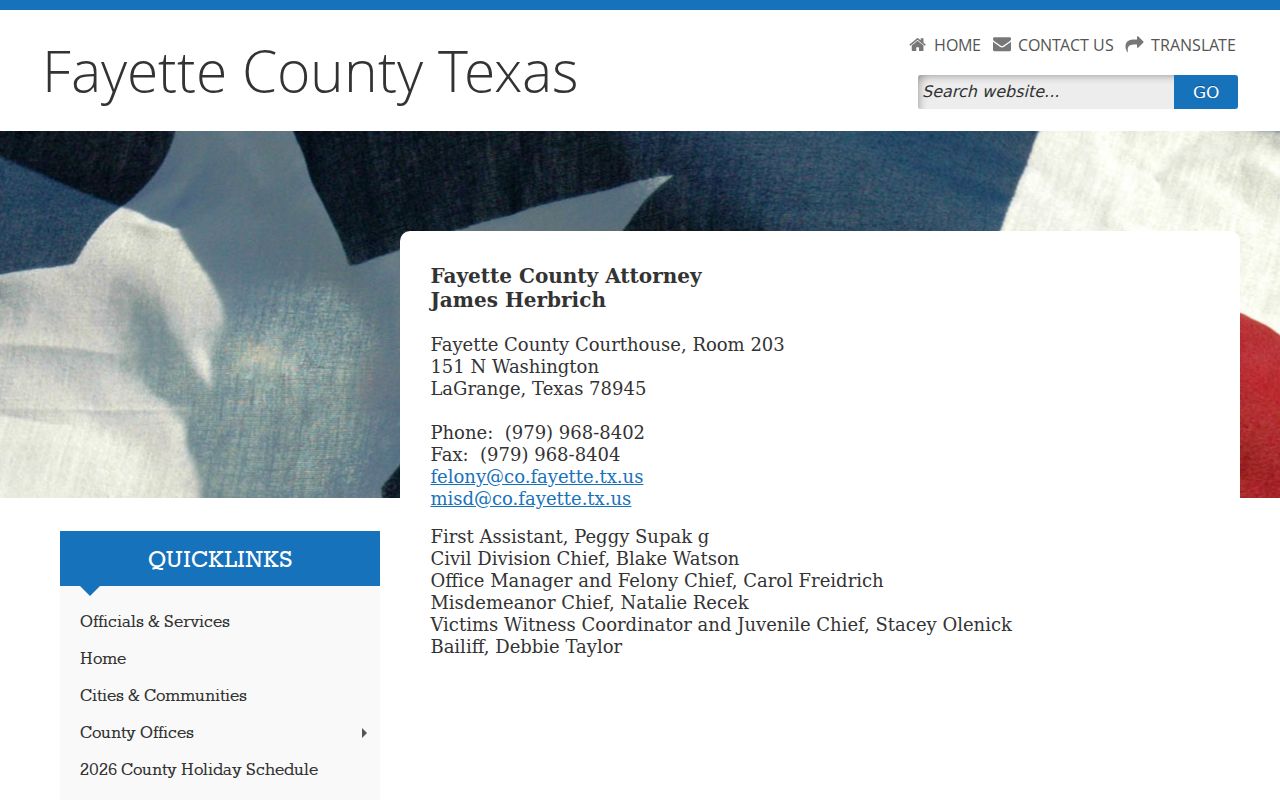
For the filed charge, docket, judgment, and certified copy, contact the clerk instead of the prosecutor. For victim-assistance communication on a filed misdemeanor, use the prosecuting office. This keeps Fayette County case requests with the office that actually holds the requested record.
Case Record Access & Restrictions
Texas court files are generally obtained from the clerk under court rules and statutes. They are not treated in exactly the same way as executive-agency records under the Texas Public Information Act. The Texas Public Information Act still governs many sheriff and prosecutor records, but it does not override a court’s control of judicial records.
Fayette County files can omit or redact juvenile material, protected victim information, driver-license data, medical facts, security details, and records covered by expunction or nondisclosure. An active law-enforcement file may also be withheld under a valid exception. “Not online” does not mean sealed. Ask the clerk whether a Fayette County case exists in paper or archive form, whether access is restricted, and what order controls that restriction.
A certified clerk copy is the sound choice when the exact disposition matters. Portal data helps locate the file, but the filed judgment is the authoritative account of the court’s decision.